Written by:
Andres Matos, NALCAB Public Policy Analyst
May 28, 2026


By Andres Matos, Public Policy Analyst
The Supreme Court’s 6-3 decision in Louisiana v. Callais (2026) fundamentally reshapes the voting rights landscape in the U.S. For more than forty years, federal law required states to ensure that minority communities had a meaningful opportunity to elect representatives of their choice — protections that were put in place due to the long history in many states, particularly in the South, of drawing district lines in ways intended to dilute the voting power of Black and Latino communities. Callais changes these protections, overturning voting rights law dating back to 1982 amendments to the Voting Rights Act (VRA) and the Court’s own ruling in Thornburg v. Gingles, which established the legal framework for “vote dilution,” the practice of drawing district lines in ways that weaken the collective voting power of minority communities.
In the Callais decision, the Court’s majority concluded that the country has changed in ways that render race-conscious redistricting no longer necessary. Writing for the majority, Justice Samuel Alito argued that “vast social change has occurred throughout the country and particularly in the South,” adding “it was hard to find pertinent evidence relating to intentional present-day voting discrimination.”1 On this basis, the Court held that drawing majority-minority districts is no longer a legal necessity for states. Under the new standard, legal challenges to electoral maps can only succeed if challengers can prove that lawmakers explicitly intended to dilute minority voting power when drawing district lines. In practice, this is an extremely high legal bar, as it is exceedingly rare for any legislature to openly state discriminatory intent.
The Court’s conclusion that the country has moved past racial discrimination in voting does not reflect the lived experience of many communities. Black and Latino voters face concrete obstacles at every stage of the electoral process, from voter roll purges and polling site closures in minority neighborhoods, to district lines drawn in ways that dilute their collective voting power. Callais is the latest and most significant development in that pattern.
For forty years, majority-minority districts have been the primary path to political representation for communities of color, particularly in the South. The impact of these districts is reflected in the current composition of Congress: 75% of all representatives of color were elected in majority-minority districts, including 74% of Black members and 84% of Hispanic members.2 Without the legal protections that allowed these districts to exist, the pipeline for minority representation in Congress is at serious risk.
Even prior to the recent decision in Callais, threats to this pipeline had begun to emerge, specifically as a mid-cycle redistricting push. First, Texas moved to redraw its voting maps at the direction of the President, prompting similar efforts in Missouri and North Carolina. Together, these new maps are projected to net Republicans roughly seven seats.
In the weeks since the ruling, Callais has accelerated that momentum significantly. Florida and Tennessee have signed new congressional maps into law, and South Carolina raced to do so as well before strong Republican opposition in their state senate ultimately killed the effort. Louisiana and Alabama have gone further still, postponing primaries already underway to give their legislatures time to implement preferred maps. At least for the moment, a federal court has blocked Alabama’s redistricting plans, finding that the proposed map deliberately discriminated against Black voters, meeting the almost-impossible standard created by Callais. Georgia and Mississippi are holding off for the current midterms but have plans in place ahead of the 2028 election. Estimates suggest that at least 15 Democratic-held districts could be redrawn to eliminate or dilute Black and Latino voting majorities. Combined with the earlier efforts by Texas, North Carolina, and Missouri, more than 22 House districts currently represented by Black or Latino members could be redrawn in ways that reduce their constituents’ ability to elect representatives who reflect their communities’ priorities.
Latinos stand to lose significant political ground in the aftermath of Callais. While Latinos constitute approximately 20% of the American population, they make up only about 10% of Congress, a gap that has persisted for decades despite population growth. That gap has a measurable cost: federal programs that support Latino entrepreneurs, homeowners, and working families depend on advocates in Congress who understand those communities from the inside. Hispanic members of Congress are concentrated in just a handful of states, and much of the South has yet to elect a Hispanic representative, despite the region’s rapidly growing Latino population. Without this representation, Latino communities risk being locked out of the political process in the regions where their population growth should translate into increased, rather than diminished, political power.
The outlook at the state level is equally stark. A recent report found that Republican legislatures across ten Southern states could eliminate roughly 191 state legislative seats currently held by Democrats, the vast majority of them held by Black representatives in majority-minority districts.3 As a result of this aggressive gerrymandering, the number of state legislative districts where Black or Hispanic voters make up a majority of the voting-age population could drop from 342 to 202, even as these voters make up a growing share of the electorate.4
When communities lose representation, they lose standing in the policy decisions that determine where federal dollars flow, which neighborhoods get investment, and which populations are included in economic recovery. Without representatives who carry their constituents’ needs into the policymaking process, entire communities are effectively excluded from the policy decisions that shape their daily lives.
Latino communities face limited access to financial services and persistent gaps in public underinvestment, gaps that compound over time and limit economic mobility across generations. Latino policymakers have been among the most consistent advocates working to address these gaps, pushing for fair lending practices, greater investment in low-income communities, and meaningful pathways to economic mobility.
When these representatives are pushed out of Congress through gerrymandered redistricting, the communities they represented lose their ability to shape the federal policies — including healthcare, economic opportunity, and education — that govern their daily lives.
The consequences of Callais extend far beyond any single district or state. When district lines are drawn to neutralize the voting power of specific communities, the result is a political system that can become insulated from the preferences of its own electorate. This is not a hypothetical risk; it is already visible in states where gerrymandered maps have produced legislative supermajorities that persist in election after election, regardless of shifts in public opinion or population.
As communities of color grow as a share of the American electorate, maps drawn in the wake of this decision are designed to ensure that growth does not translate into proportional political power. Put simply, gerrymandering can produce a political system in which how districts are drawn carries far more weight than the will of voters, and the economic priorities of growing communities are excluded from the decisions that shape their futures.
NALCAB supports a national network of CDFIs and community economic development organizations working to expand economic opportunity for predominantly Latino communities. Callais represents a significant shift in the policy environment influencing this work that threatens to reverse the gains Black and Latino policymakers have won over the last few decades. This shift risks diminishing our communities’ representation, leaving them without a voice in the political decision-making that shapes their economic future.

New investment includes a $2M lending facility and over $6M in philanthropic and pro bono support...
Read more
New awards recognize members expanding access to capital and creating lasting economic opportunit...
Read more
By Andres Matos, Public Policy Analyst Latino-owned businesses (LOBs) are one of the fa...
Read more
By Andres Matos, Public Policy Analyst Over the past eighteen months, the Small Business Administ...
Read more
“Juntos en la Lucha: Activating Our Power” convenes practitioners, funders, and polic...
Read more
For Chris Sherman, supporting NALCAB’s capital campaign is about more than a new home—it’s about ...
Read more
By NALCAB, Public Policy Roughly 814 banks would no longer be evaluated on community development ...
Read more
Last week, NALCAB welcomed a curated group of seven member organizations from across the country,...
Read more
Washington, D.C. – July 4, 2026 – The National Association for Latino Community Asset Builders (N...
Read more
WASHINGTON, DC, June 8, 2026 — NALCAB (National Association for Latino Community Asset Buil...
Read more
WASHINGTON, DC, June 8, 2026 — NALCAB (National Association for Latino Community Asset Buil...
Read more
By Andres Matos, Public Policy Analyst The Supreme Court’s 6-3 decision in Louisiana v. Callais (...
Read more
Opportunity Zones, the Community Development Dilemma, and Census Tract Selection By Jeremy Carter...
Read more
By Marissa Ramirez and Andres Matos President Trump released his budget request for Fi...
Read more
San Antonio — NALCAB (National Association for Latino Community Asset Builders) proudly announces...
Read more
Maker to Market Accelerator (M2M) WASHINGTON, DC – NALCAB (National Association for L...
Read more
NALCAB is a one-of-a-kind CDFI intermediary and network of 200+ organizations, rep...
Read more
SAN ANTONIO — The National Association for Latino Community Asset Builders (NALCAB) announced the...
Read more
NALCAB Announces Grants to 10 Nonprofits with Support from Wells Fargo Foundation $30k Grant ...
Read more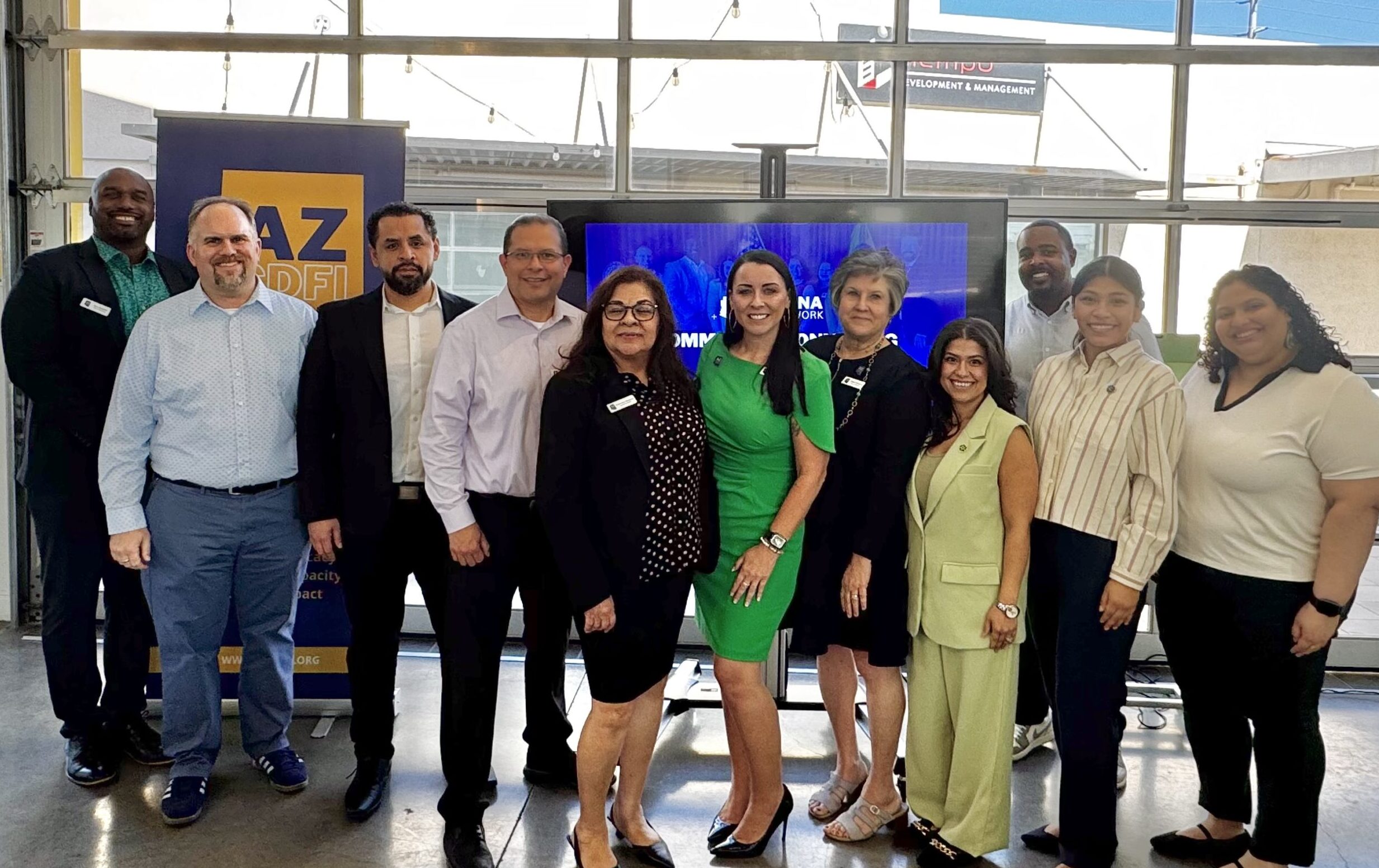
Working together to expand affordable capital for housing and small businesses across Arizona. PH...
Read more
Latinos bring vitality and innovation to local economies nationwide. This Hispanic Heritage Month...
Read more
Latinos bring vitality and innovation to local economies nationwide. This Hispanic Heritage Month...
Read more
Latinos are bringing vitality to local economies across the country. To celebrate this impact for...
Read more
Casitas of Villa Victoria, IBA’s affordable housing community, blend Boston’s architecture with P...
Read more
Latinos are bringing vitality to local economies across the country. To celebrate this impact for...
Read more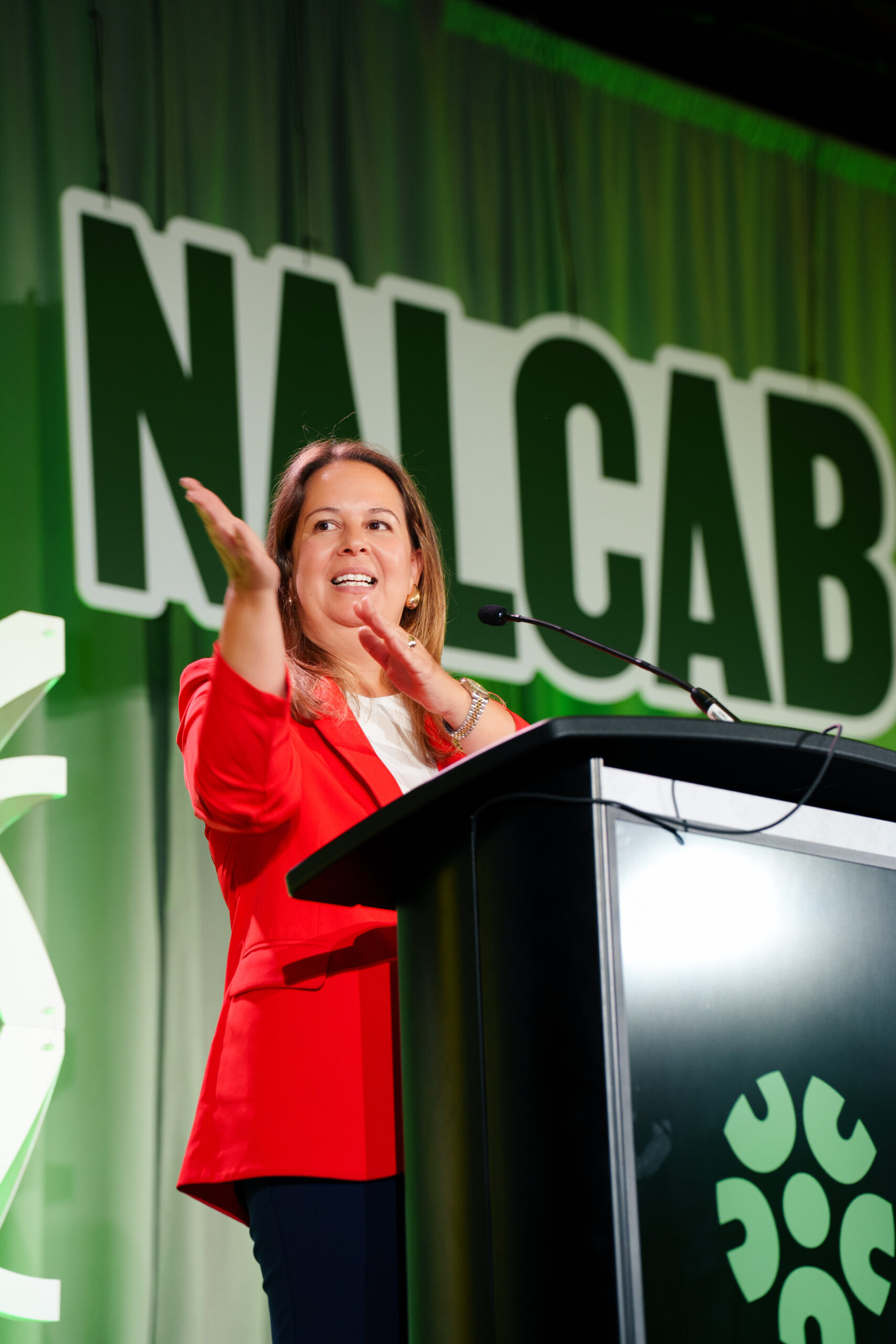
Over 400 attendees from more than 35 states arrived in Nashville last week for NALCAB’s National ...
Read more
As I reflect on my journey in the LEAD Fellowship, I’m filled with a deep sense of gratitude, gro...
Read more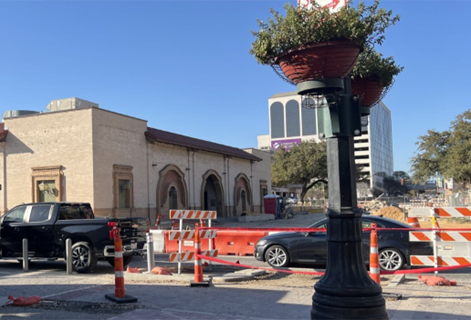
March 11, 2025: Construction is underway at NALCAB’s new San Antonio office in Downtown San Anton...
Read more
On May 22, the House passed its version of the reconciliation package, H.R. 1, titled the “One Bi...
Read more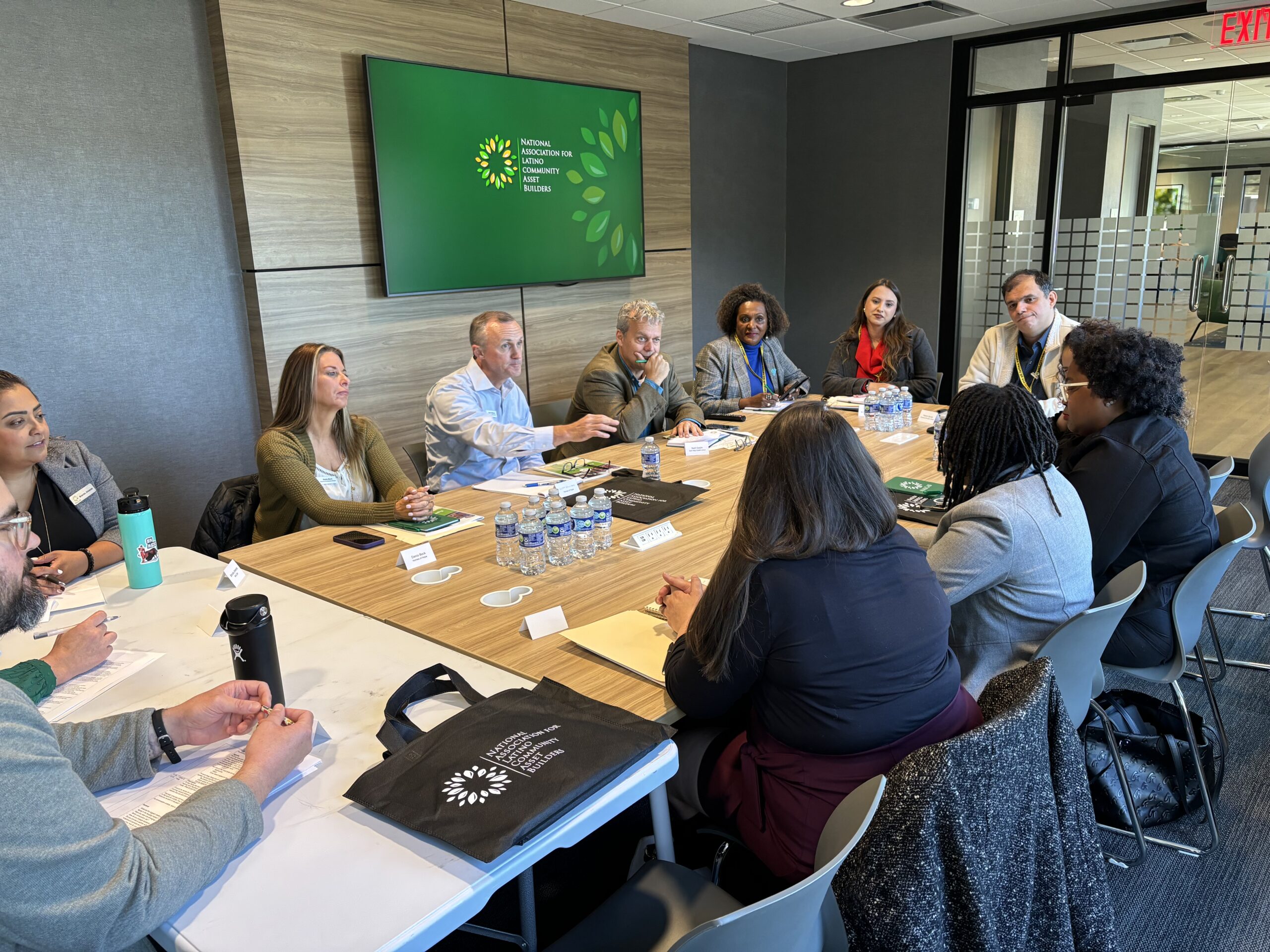
NALCAB manages its financial resources in a responsible, accountable, and transparent manner that...
Read more
Through Inclusive Action, Angel was able to secure two Raices loans to help set his plans on track.
Read more
Hispanic Interest Coalition of Alabama (¡HICA!), is dedicated to supporting Latino communities an...
Read more
Through a $100,000 subgrant, technical assistance, and training provided by NALCAB and the Wells ...
Read more
With these federal dollars, Merced Housing Texas will be able to continue building resilient neig...
Read more
NALCAB provided a $650,000 loan to Centro para la Reconstrucción del Hábitat, Inc. (CRH) with sup...
Read more
Climbing Together | Citi and NALCAB’s CDFI Certification Program Leads to 12 Technical Assistance...
Read more
Learn about a comprehensive slate of webinars, public policy opportunities, and trainings, our 20...
Read more


In accordance with federal law and U.S. Department of the Treasury policy, this institution is prohibited from discriminating based on race, color, national origin, sex, age, or disability. Submit a complaint of discrimination, by mail to U.S. Department of the Treasury, Office of Civil Rights and Equal Employment Opportunity, 1500 Pennsylvania Ave. N.W., Washington, D.C. 20220, (202) 622-1160 (phone), (202) 622-0367 (fax), or email [email protected]