Written by:
NALCAB Public Policy - Marissa Ramirez and Andres Matos
Apr 16, 2026


By Marissa Ramirez and Andres Matos
President Trump released his budget request for Fiscal Year 2027 on Friday, April 3rd, outlining his Administration’s funding priorities for the upcoming year. This is an important signal of the Administration’s priorities regarding investments in community financing, small businesses, affordable housing, rural development, and more. While the budget request is an important document, it is not the final say in federal funding. Congress will ultimately decide how much money programs receive through the federal appropriations process.
What is a presidential budget request?
Each year, the President submits a budget request to Congress detailing the Administration’s aspirations for how the federal government spends its money in the upcoming fiscal year, which begins on October 1. The budget includes recommended funding levels for federal departments and agencies, policy priorities, and, in many cases, proposals to expand, reduce, restructure, or eliminate specific programs. In short, this is the Administration’s opening bid.
It serves a few purposes, including signaling the President’s overall funding priorities and letting Congress know what the Administration would like to see in their funding packages. Importantly, the President does not dictate federal funding levels, so this document is akin to a wish list to Congress, who ultimately decide how to appropriate federal funds.
What is Congress’s role in federal appropriations?
Congress holds the power of the purse, meaning they may choose to accept some of the President’s budget requests, or reject some or all of them. In the coming months, appropriations committees in the House and Senate will draft, debate, and pass the 12 annual funding bills that dictate funding for federal programs. The goal is to pass these bills before the start of the fiscal year, October 1, 2026. If they are unable to agree on funding levels before that date, they may choose to pass a continuing resolution. The appropriations bills cover different areas of government, such as Agriculture, Transportation-HUD, and Financial Services and General Government. The key programs NALCAB tracks are spread across several of these bills, depending on which federal agency administers them.
What’s in the President’s budget request?
Community Development Financial Institutions (CDFI) Fund
Small Business Administration (SBA)
Department of Housing and Urban Development
Department of Health and Human Services
Community Economic Development Program
US Department of Agriculture Rural Housing and Development Programs
US Department of Agriculture Rural Business and Economic Development Loans
What can you do?
Read the President’s full budget request here to learn more about how programs you and your organization utilize are affected.
NALCAB members can review our proposed funding levels for key programs here, and use this to guide your advocacy efforts for these programs.
Questions? Reach out to NALCAB’s policy team at [email protected].

New investment includes a $2M lending facility and over $6M in philanthropic and pro bono support...
Read more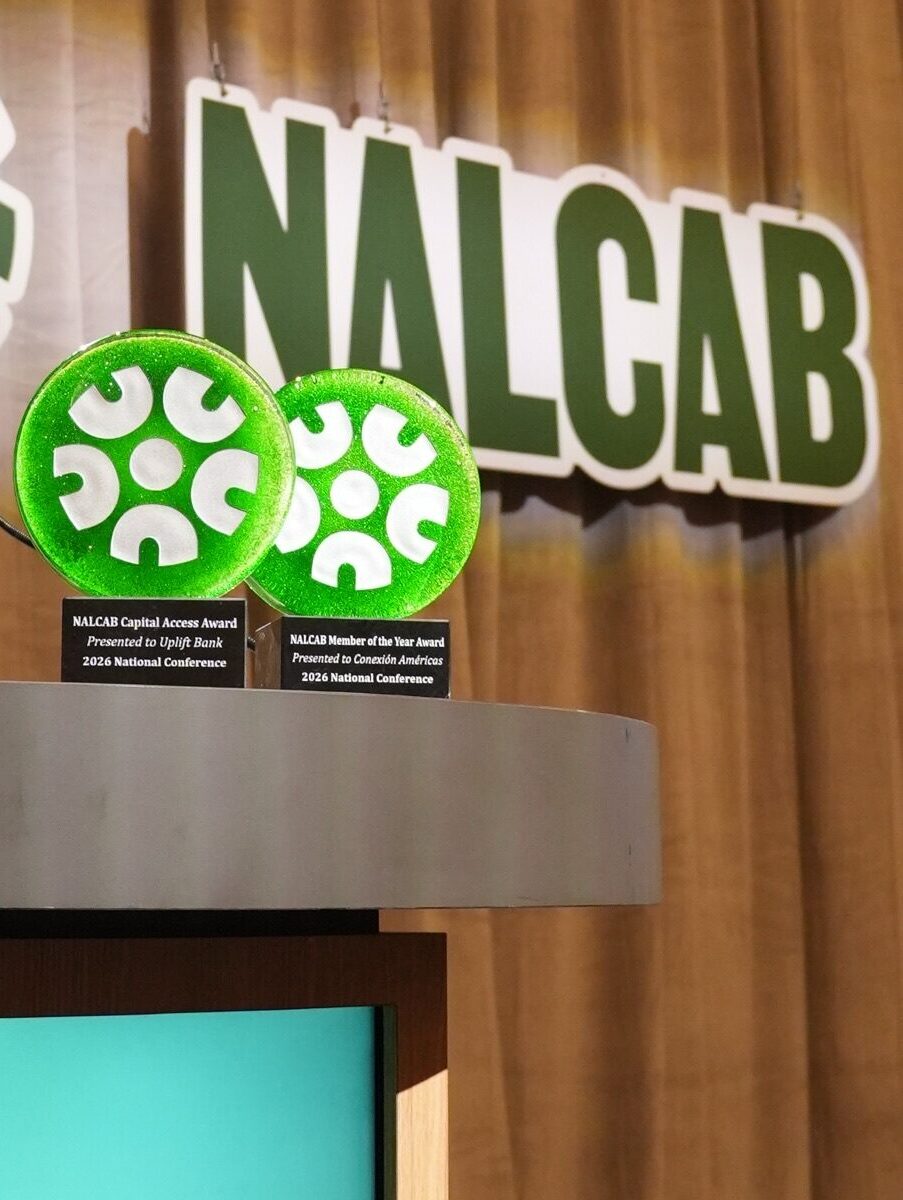
New awards recognize members expanding access to capital and creating lasting economic opportunit...
Read more
By Andres Matos, Public Policy Analyst Latino-owned businesses (LOBs) are one of the fa...
Read more
By Andres Matos, Public Policy Analyst Over the past eighteen months, the Small Business Administ...
Read more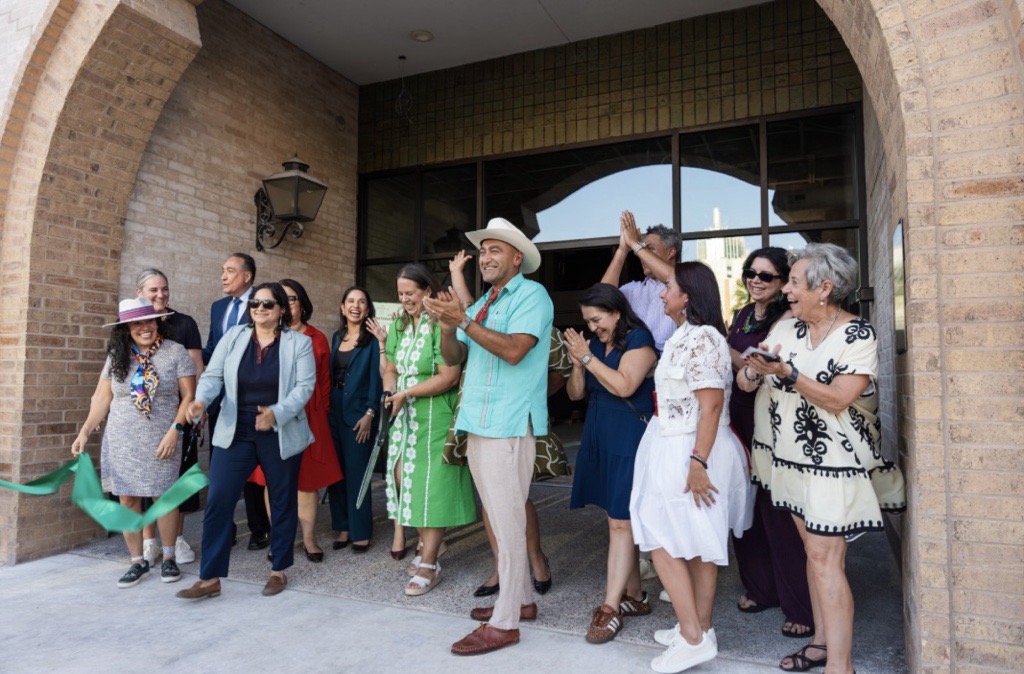
“Juntos en la Lucha: Activating Our Power” convenes practitioners, funders, and polic...
Read more
For Chris Sherman, supporting NALCAB’s capital campaign is about more than a new home—it’s about ...
Read more
By NALCAB, Public Policy Roughly 814 banks would no longer be evaluated on community development ...
Read more
Last week, NALCAB welcomed a curated group of seven member organizations from across the country,...
Read more
Washington, D.C. – July 4, 2026 – The National Association for Latino Community Asset Builders (N...
Read more
WASHINGTON, DC, June 8, 2026 — NALCAB (National Association for Latino Community Asset Buil...
Read more
WASHINGTON, DC, June 8, 2026 — NALCAB (National Association for Latino Community Asset Buil...
Read more
By Andres Matos, Public Policy Analyst The Supreme Court’s 6-3 decision in Louisiana v. Callais (...
Read more
Opportunity Zones, the Community Development Dilemma, and Census Tract Selection By Jeremy Carter...
Read more
By Marissa Ramirez and Andres Matos President Trump released his budget request for Fi...
Read more
San Antonio — NALCAB (National Association for Latino Community Asset Builders) proudly announces...
Read more
Maker to Market Accelerator (M2M) WASHINGTON, DC – NALCAB (National Association for L...
Read more
NALCAB is a one-of-a-kind CDFI intermediary and network of 200+ organizations, rep...
Read more
SAN ANTONIO — The National Association for Latino Community Asset Builders (NALCAB) announced the...
Read more
NALCAB Announces Grants to 10 Nonprofits with Support from Wells Fargo Foundation $30k Grant ...
Read more
Working together to expand affordable capital for housing and small businesses across Arizona. PH...
Read more
Latinos bring vitality and innovation to local economies nationwide. This Hispanic Heritage Month...
Read more
Latinos bring vitality and innovation to local economies nationwide. This Hispanic Heritage Month...
Read more
Latinos are bringing vitality to local economies across the country. To celebrate this impact for...
Read more
Casitas of Villa Victoria, IBA’s affordable housing community, blend Boston’s architecture with P...
Read more
Latinos are bringing vitality to local economies across the country. To celebrate this impact for...
Read more
Over 400 attendees from more than 35 states arrived in Nashville last week for NALCAB’s National ...
Read more
As I reflect on my journey in the LEAD Fellowship, I’m filled with a deep sense of gratitude, gro...
Read more
March 11, 2025: Construction is underway at NALCAB’s new San Antonio office in Downtown San Anton...
Read more
On May 22, the House passed its version of the reconciliation package, H.R. 1, titled the “One Bi...
Read more
NALCAB manages its financial resources in a responsible, accountable, and transparent manner that...
Read more
Through Inclusive Action, Angel was able to secure two Raices loans to help set his plans on track.
Read more
Hispanic Interest Coalition of Alabama (¡HICA!), is dedicated to supporting Latino communities an...
Read more
Through a $100,000 subgrant, technical assistance, and training provided by NALCAB and the Wells ...
Read more
With these federal dollars, Merced Housing Texas will be able to continue building resilient neig...
Read more
NALCAB provided a $650,000 loan to Centro para la Reconstrucción del Hábitat, Inc. (CRH) with sup...
Read more
Climbing Together | Citi and NALCAB’s CDFI Certification Program Leads to 12 Technical Assistance...
Read more
Learn about a comprehensive slate of webinars, public policy opportunities, and trainings, our 20...
Read more


In accordance with federal law and U.S. Department of the Treasury policy, this institution is prohibited from discriminating based on race, color, national origin, sex, age, or disability. Submit a complaint of discrimination, by mail to U.S. Department of the Treasury, Office of Civil Rights and Equal Employment Opportunity, 1500 Pennsylvania Ave. N.W., Washington, D.C. 20220, (202) 622-1160 (phone), (202) 622-0367 (fax), or email [email protected]